Quick Answer
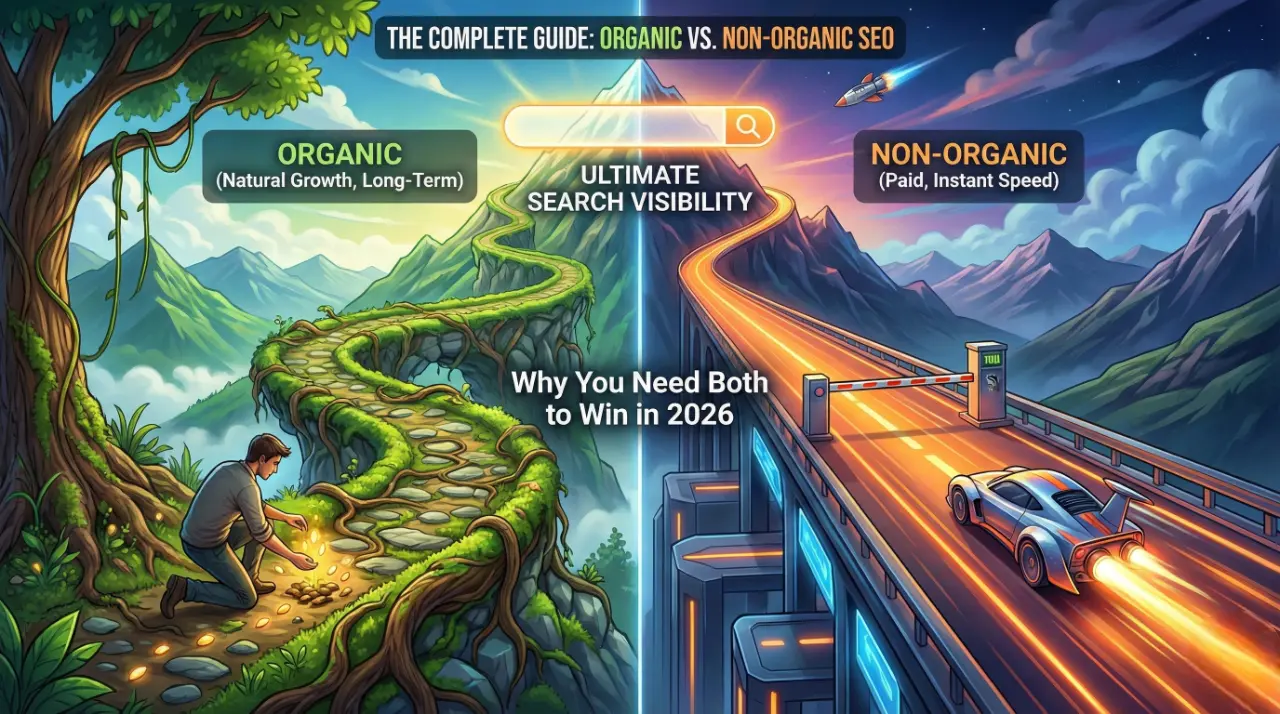
In the world of digital marketing, there are only two ways to get noticed: You can earn attention, or you can buy it.This is the fundamental difference between Organic SEO (Search Engine Optimization) and Non-Organic SEO (often called SEM or PPC).If you are a business owner or marketing manager in 2026, understanding the mechanics of these two engines is not optional.
Key Takeaways
- Actionable strategies backed by 5+ years of industry experience
- Data-driven approach from Nectra Digital SEO experts
- Applicable for businesses in India and global markets
- Updated for 2026 best practices and algorithm changes
Expert Insight
Ravindra Kumar Chauhan, Founder & CEO:
"The strategies outlined here reflect what we implement daily for clients achieving 340%+ organic growth. Focus on fundamentals first — technical SEO, content authority, and user experience — before chasing trends."
In the world of digital marketing, there are only two ways to get noticed: You can earn attention, or you can buy it.
This is the fundamental difference between Organic SEO (Search Engine Optimization) and Non-Organic SEO (often called SEM or PPC).
If you are a business owner or marketing manager in 2026, understanding the mechanics of these two engines is not optional. Choosing the wrong one"”or ignoring one entirely"”can burn your budget or leave you invisible.
Here is the complete breakdown of how they work, when to use them, and how NectraDigital combines them for maximum impact.
1. The Definitions (In Plain English)
What is Organic SEO?
Organic SEO is the art of optimizing your website so that search engines (like Google, Bing, or Perplexity) rank it highly naturally.
The Cost: Time, effort, and expertise (content creation, technical fixes).
The Result: "Free" traffic. You don't pay when someone clicks.
The Vibe: Like planting a garden. It takes months to grow, but it feeds you for years.
What is Non-Organic SEO?
Non-Organic SEO refers to Paid Search or PPC (Pay-Per-Click). These are the listings marked "Sponsored" or "Ad" at the very top of the search results.
The Cost: Money. You bid on keywords (e.g., "Best CRM software") and pay every time someone clicks.
The Result: Instant visibility. You can be #1 in 5 minutes.
The Vibe: Like a vending machine. You put money in, you get a lead out. You stop paying, the leads stop immediately.
2. Head-to-Head Comparison
Here is the cheat sheet for how they stack up against each other.
| Feature | Organic SEO (Natural) | Non-Organic SEO (Paid/PPC) |
| Speed | Slow (3-6 months to see traction) | Instant (Traffic starts the moment you pay) |
| Cost Model | Upfront investment (time/content) | Pay-as-you-go (per click) |
| Trust Factor | High (Users trust organic results more) | Medium/Low (Users know it's an ad) |
| Longevity | Long-term (Rankings can last years) | Zero (Disappears when budget runs out) |
| Control | Low (Algorithms change constantly) | High (You control the copy, landing page, and bid) |
| ROI | Compounding (Gets cheaper over time) | Linear (Cost stays arguably flat or rises) |
3. Deep Dive: Organic SEO (The Long Game)
The Pros
The "Trust Premium": In 2026, users are skeptical. They often skip the ads and click the first organic result because they trust Google's endorsement. An organic click converts at a higher rate for "informational" searches.
Cost Efficiency at Scale: Once you rank for a high-volume keyword, every click is effectively free. The ROI becomes infinite over time.
Brand Authority: Ranking #1 makes you look like the industry leader. It is a status symbol.
The Cons
The Waiting Game: You cannot "turn on" SEO. It requires patience.
Algorithm Volatility: Google updates its algorithm thousands of times a year. You can lose traffic overnight if you don't maintain your site.
High Effort: It requires high-quality content, technical optimization, and backlinks. You can't fake it anymore.
4. Deep Dive: Non-Organic SEO (The Speed Demon)
The Pros
Instant Feedback Loop: Launch a campaign on Monday, get data on Tuesday. This is perfect for testing new products or messaging.
Laser Targeting: You can target by location, time of day, device, and even audience demographics. You can show ads only to people in Lucknow searching for "software development" between 9 AM and 5 PM.
Dominate "Above the Fold": On mobile devices, ads often take up the entire screen. If you aren't paying, users have to scroll to find you.
The Cons
Ad Blindness: Many users (especially Gen Z) have trained their brains to ignore anything that looks like an ad.
The "Tax": As more competitors enter the market, the Cost Per Click (CPC) rises. It becomes a bidding war.
No Asset Value: You are renting the space. You aren't building equity.
5. The NectraDigital Strategy: The "Hybrid Engine"
Most agencies will try to sell you one or the other. At NectraDigital, we believe that is a mistake.
The smartest brands use them together.
Phase 1: The Test (Non-Organic)
Don't write 50 blog posts about a topic nobody cares about.
Run a small Google Ads campaign for that keyword first.
If it converts: Great! Now invest in Organic SEO to rank for it permanently.
If it fails: You just saved yourself 6 months of writing bad content.
Phase 2: The Takeover (Hybrid)
For your most profitable keywords, you want to dominate the entire screen.
Buy the Ad spot.
Rank for the Organic spot.
This gives you 2x the visibility and pushes a competitor off the page.
Phase 3: The Safety Net (Retargeting)
Use Non-Organic ads to "catch" the people who found you via Organic SEO but didn't buy.
User reads your blog (Organic).
User leaves.
User sees your ad on YouTube or Instagram (Non-Organic).
User comes back and buys.
Conclusion: Which One Should You Choose?
Choose Non-Organic SEO if: You are a new business, you have a time-sensitive offer (like a sale), or you need immediate leads to keep the lights on.
Choose Organic SEO if: You want to build a sustainable brand, reduce your acquisition costs over time, and become an industry authority.
Ideally? Do both.
Stop treating them like enemies. They are teammates.
Need help building your Hybrid Engine?
At NectraDigital, we manage both sides of the coin. We build the content that ranks and the ads that convert. Contact us today for a complete audit of your search strategy.
Summary
This guide on The Great Debate: Organic SEO vs. Non-Organic SEO (And Why You Need Both) provides comprehensive, expert-verified information from Nectra Digital. For personalized strategy and implementation, book a free consultation with our team.
Ravindra Kumar Chauhan
Founder & CEO
SEO expert and digital strategist with 5+ Years of experience. Author verified by Nectra Digital editorial team.
LinkedIn · Editorial GuidelinesArticle FAQ
Related Resources
Discussions
No discussions yet.